Monday, February 17, 2014

Nagasaki - The Suppression of Christianity

Nagasaki... probably one of my top cities, if not The Top City. I don't know if it was the fact it is on a harbor or its rich cultural heritage, but I toured the crap out of this place. I even visited multiple museums! I am not usually a museum person so this should say something. The people of Nagasaki are among the nicest I've met in Japan -- seriously, don't hesitate to ask them for directions.

One thing I picked up regarding traveling was to buy the one-day tram pass at a JR station (or hotel, supposedly). It cost 500 yen and provided unlimited travel for one day (or more... if you're unscrupulous).

I was originally going to divide Nagasaki up into multiple tours (as they were outlined in a tour book I bought), but I thought that it might be easier if I divide it into more of a linear historical way instead.

Let the games begin!


Sunday, February 16, 2014

Hashima (端島)

Hashima, otherwise known as Gunkanjima (which translates into "Battleship Island" due to its similar appearance to a battleship), is an island currently uninhabitable by humans unless of course, you're Raoul Silva and planning to destroy the world in the James Bond movie Skyfall. Then the lack of water and electricity (maybe he used a generator?) wouldn't bother you. Despite the movie's trick into making you think it's not too far from Macau, it's actually right off the coast of Nagasaki.

I was able to get a see it via the tour company Gunkanjima Concierge and was even able to get on the island! Our tour guide was sure to wear a little construction (coal miner?) hat to complete the tour.


Hashima was purchased by the Mitsubishi Goshi Kaisha to take advantage of its coal in 1890. As coal became the next big thing in energy production, the population of Hashima grew until had a population density greater than Tokyo. It was here that Japan's first reinforced concrete high-rise apartment buildings were built -- the concrete was used because the island had little protection from typhoons.


The above apartment building was for the rich people; each apartment had its own bathroom.


Coal mining was dangerous work... the miners (not to be confused with "minors") would ascend the stairway (seen below on the right) up to an elevator that contained no walls or roof. To get to the seabed coal reserves took them down 1,000 meters below sea level where they'd experience extreme temperatures and humidity in addition to the possibility of gas explosions. Controversy exists today because Mitsubishi forced Chinese and Korean laborers to work in the worst parts of mine and in general austere living conditions.


Returning from their work, they would wash in three different types of baths (two of which were salt water) in the brick building known as the General Office building. The bathtub was said to always be a pitch black from all the grime.


In the next photo, you can see the remains of the conveyor belt that would transport coal to the storage facility... it almost looks like a bunch of goal posts.


In the below photo, the white building is the quarantine building for patients with dysentery. The building immediately on the left is the hospital.


But what happened here? It actually had nothing to do with the atomic bomb.... it was simple economics. When Japan started to prefer oil to coal, the city was simply shut down in 1974. Though I do always love a good tragedy, I think it makes the island less creepy and more enjoyable.

Friday, February 14, 2014

Nagasaki Lantern Festival

The Japanese are nothing if not punctual. If a train is coming at 11:41am then it is coming at 11:41am. If the Nagasaki Lantern Festival is over at 10pm, then you better believe that the lanterns will be off at 10pm. On. The. Dot.


I'm not joking about that… I was merrily taking photos of lanterns and then they just went dead. Off. Dark. I pulled out my phone and lo! It was 10pm. They don't mess around here, people. Because of a slight delay in my flight due to the Great Snow Fall (part 2) in Tokyo, I was only able to catch about 45 minutes of this amazing festival when they shut it down until next year.

Before I show off my average photography skills, I'll throw a little info your way regarding what the Nagasaki Lantern Festival even is. If you didn't realize it (and I didn't), Nagasaki is actually very close to the rest of Asia and was an excellent port for trade. As such, there are a lot of different cultural communities in Nagasaki -- Chinese being one (and is actually home to one of the three biggest Chinatowns in Japan with Yokohama and Kobe). Initially started by Chinese residents in Nagasaki Shinchi Chinatown as a "Chinese New Year Celebration" (or Shunsetsu Festival), this festival has since grown in popularity and also in generic name ("Nagasaki Lantern Festival") since 1994.

Apparently, it is believed that the spirits can be seen flying through the sky and since people are nosy, they decided to use lanterns to ensure that they saw the aforementioned spirits. I don't know, seems kinda creepy.

Because of my tardiness, I missed most of the shows that were put on, but I was able to "be entranced" (as the pamphlet put it) by the 15,000 Chinese lanterns and even sneak a few photos of two of the main areas before they rudely decided I'd seen enough and turned off the lights. If you'll excuse the fact that I still haven't mastered lantern photography, enjoy the below!


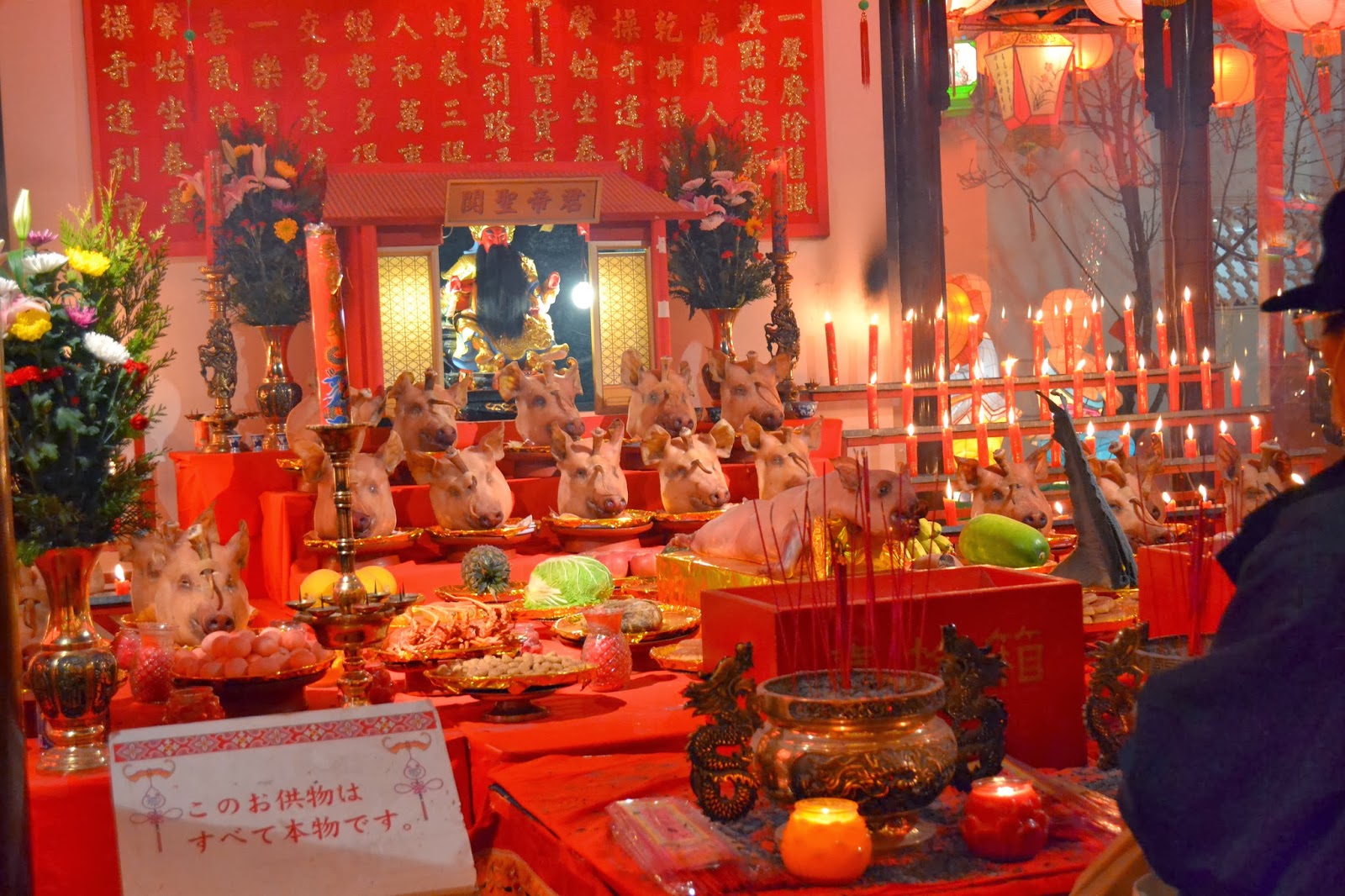
This sorta made me think of Game of Thrones… but it was a prayer type place though I wasn't able to get to the bottom of all the pig heads.


Year of the Horse!

You could get on this thing and take a photo, but I felt like too much of a dork asking some random stranger to take one of me.


Tuesday, February 11, 2014

Otaru Lantern Festival

Everyone (in Japan) knows about Sapporo's Snow Festival, but not as many people have been to Otaru's Lantern Festival. The city is located about 45 minutes by train outside of Sapporo and is worth the visit if you're there during Sapporo's festival. The city itself is known as the "Venice of Japan", because of a canal that runs along the coastline. At any rate, the city folk light up a bunch of candles to make their city oh-so-romantic. There are apparently two major sites, but I could not find the second one located in the area Temiyasen (apparently runs parallel to the Otaru Canal) which is a shame because I think that one was actually cooler. Instead I focused on the area right next to the canal known as the Unga Kaijo area. It's about a ten minute walk straight down the main street toward the ocean from the station. 

The atmosphere from the candle lit frozen flowers, wax bowls with leaves, and snowball lanterns made for a very romantic setting. Just to drive home the point, many of their sculptures centered around hearts. If you were single, then you should probably leave this area feeling sad. 

Ready? Set? Go!


Sapporo Art Park

Sapporo Art Park is an outdoor modern art park that was created to allow enjoyment of art in an outdoor setting. The park is truly meant to be enjoyed during the summer and spring, but the Japanese know never to miss out on an opportunity so they temporarily open it in the winter. It's free (normally it costs 600 yen) but the trick is you have to wear snowshoes. Additionally the usual warning of "don't rise to the work" (AKA - don't touch the statues) is null and void during the winter time.

Luckily there was an English pamphlet that instructed me on the correct application of the snowshoes. I thought I had it all figured out, but it turns out that I had no clue and was literally soaked when I was done because the snowshoes either didn't work or I was wearing them wrong. 

Seeing the statues in the snow was actually pretty awesome, my favorite part being all the naked people enjoying their time in frigid outdoors. 

Sapporo (札幌市)

All right, so there is quite a bit to do in Sapporo beyond staring at snow and ice sculptures. For one thing, we ate a lot of awesome food -- chief among which was known as Genghis Khan. Why would a food be named Genghis Khan you ask? Well it's certainly not after the Star Trek movie.


Sapporo Snow Festival

It's that time of year when Kelli must venture out into lands covered with God's frozen tears, so profuse that it sometimes hides bikes from their owners...


... and is used to create giant ice and snow sculptures, just for fun (and maybe some tourism). That place was Sapporo during their 65th annual Snow Festival (site is here). To quote their brochure, "Welcome to a world plaza that evokes a pristine snow fantasy."